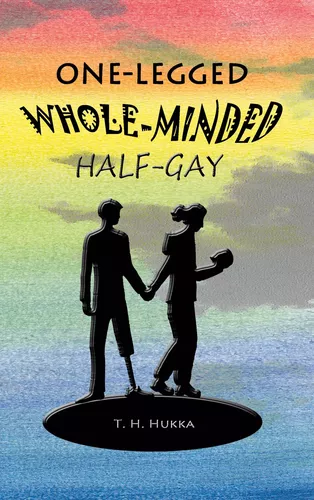
Johnny lost his brother and his left leg in a car crash. He tries to rehabilitate and continue his unfinished studies in a small town upper secondary school, even though the trauma still haunts his mind, and it is hard to manage with a prosthetic leg in daily life. A mental health nurse benevolently pushes Johnny forward in his life, but the introverted young man, who is prone to excessive reflection, sees an abyss of meaninglessness in front of him. Going forward would mean falling, but it is difficult for an outsider to understand that. When Johnny meets androgynous, genderqueer Ilya, the tension between the meaninglessness of life and intentional existence becomes provocatively glaring. Peculiar, norm questioning Ilya blasts the colours back into the black and grey world of Johnny. But some people feel that Ilya is somehow above the others, and that makes Johnny scared for his behalf. How does the seemingly civilized school community, or the rest of the world, see them? What is the position of a particularly sensitive, introverted, genderqueer, dissident, neurodivergent, or person having mental health problems or functional limitations in a world built on the terms of normative people? And if love is a vital medicine, who has the right to limit its sharing?
T. H. Hukka is a nonbinary psychologist, neuropsychiatric coach and art therapy instructor in mental health services. They have written and published in Finnish a series of fantasy books and other novels, the main characters of which are in some way different from the majority population.









Kirjasta ei ole ilmestynyt lehdistöarvosteluja.